

In the UK, one in three workplace deaths was attributed to unsafe maintenance in 2009/2010 under Northern Ireland safety guidance, a reminder that servicing is a control for life-critical risk, not an administrative chore. The danger is particularly clear around off-highway equipment, where stored hydraulic energy, moving machinery, vehicle interfaces and defective components can turn a missed inspection into a serious incident. UK HSE maintenance guidance requires work to be planned and completed by a competent person, with manufacturer instructions used as a guide.
Effective mobile plant maintenance combines three disciplines. The first is safe mechanical intervention, including isolation and depressurisation. The second is hydraulic contamination control, because clean fluid protects pumps, valves and control circuits. The third is operational visibility, especially as telematics, rental fleets and remote diagnostics change how equipment is inspected and repaired.
Why Mobile Plant Maintenance Is a Safety-Critical Priority
Mobile plant sits where people, vehicles, stored energy and heavy loads meet. A machine can appear serviceable while a worn hose, sticking valve, damaged tyre or defective brake is developing into a failure. That's why planned mobile plant maintenance must be treated as a foundational risk control rather than work that can be postponed until the next convenient shutdown.
The UK construction safety picture shows the consequences. In 2022, 22 people were killed after being struck by a moving vehicle and 15 were killed after coming into contact with moving machinery, according to the Health and Safety Executive's maintenance information. The same guidance links mobile plant incidents with malfunctioning parts, operator error, inadequate safety measures and lack of maintenance.

Competence and isolation come first
The person carrying out maintenance needs the right knowledge, experience and training for the machine and the task. That includes understanding hydraulic schematics, stored pressure, load-holding devices, electrical isolation and the manufacturer's service requirements. A competent technician doesn't rely on a control lever being in neutral. They isolate the machine, secure attachments, release stored hydraulic energy and verify that pressure has fallen before loosening a connection.
Pressurised fluid systems present a specific hazard because oil can remain trapped after the prime mover stops. A pinhole leak can penetrate skin, while an unexpected movement can crush a person working beneath an attachment. Safe isolation therefore belongs in the work instruction, permit process and toolbox discussion, not just in the technician's personal routine.
Practical rule: if the isolation state can't be proved, the work hasn't safely started.
Maintenance records support duty of care
A sound regime leaves an auditable trail. Records should show the asset identity, operating hours, inspection findings, defects raised, parts fitted, technician competence, isolation steps and return-to-service checks. For regulated operations, UK environmental management guidance for mobile plant requires a written management system that identifies and minimises pollution risks arising from operation, maintenance, accidents, incidents, non-conformances, closure and complaints.
That requirement changes the meaning of a hydraulic leak. It's not only evidence of seal or hose deterioration. It may also represent a pollution-control failure, an unsafe work area and a gap in the site's management system. Scheduled servicing, clean repair practices and documented defect closure protect people while supporting compliance and reducing litigation exposure.
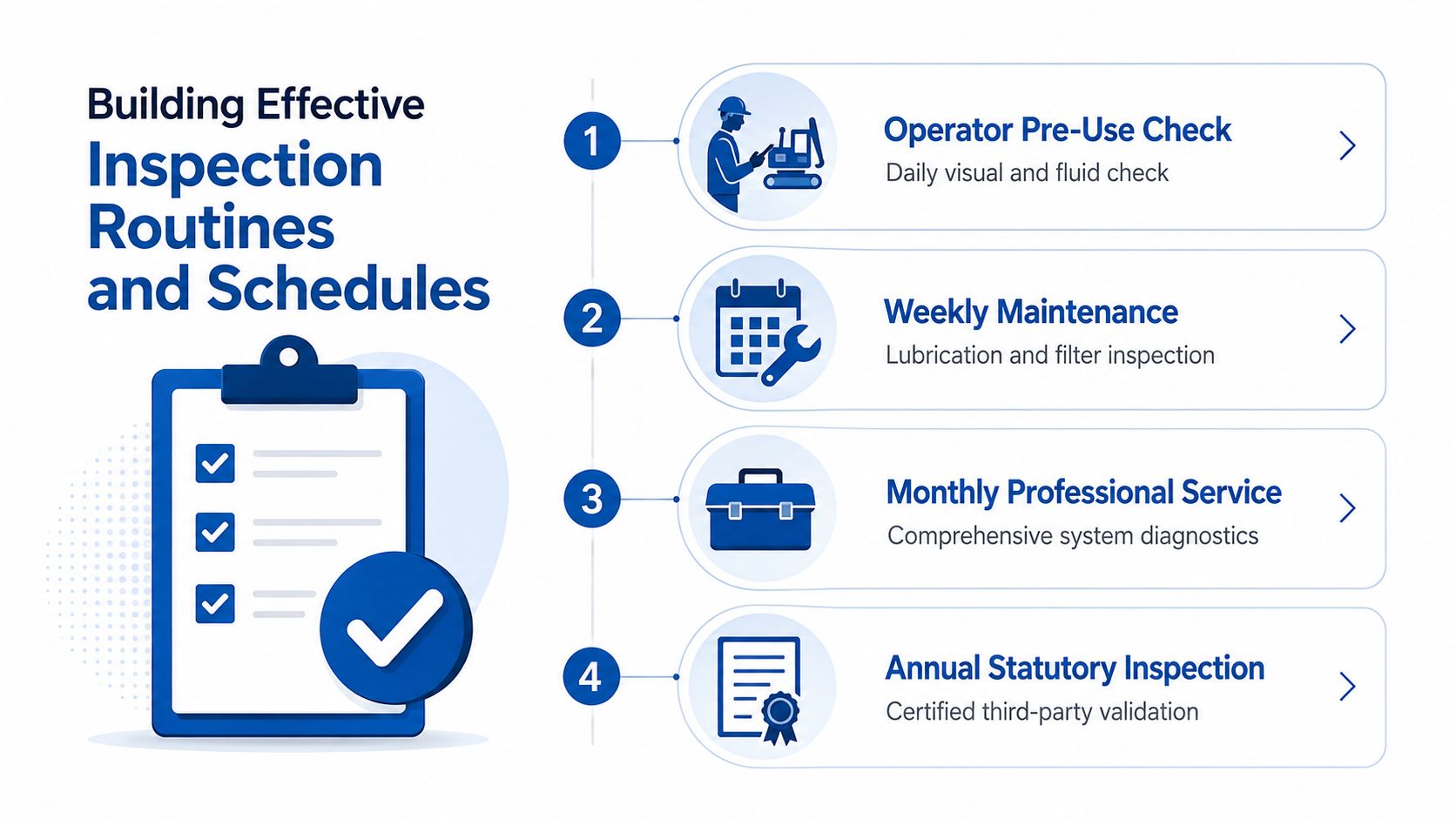
Building Effective Inspection Routines and Schedules
A workable inspection programme starts with the person closest to the machine. Operators should complete a pre-use check before putting plant to work, then report defects in a way that gives the maintenance team enough information to make a safe decision. “Hydraulic leak” isn't enough. The report should identify the asset, location, affected component, severity, photographs where permitted, operating-hour reading and whether the machine has been isolated.
The HSE maintenance requirements state that maintenance should be regular, guided by the manufacturer's instructions and performed by a competent person. Build the schedule around operating hours and safety-critical condition checks, not only calendar dates.
The daily operator check
A short, consistent check should cover:
- Hydraulic hoses and fittings: Look for abrasion, bulging, damaged covers, wetness around fittings and signs that a hose is rubbing against structure.
- Oil and fluid levels: Check hydraulic oil, engine oil, coolant or water, and fuel using the manufacturer's specified method. A falling level can indicate a leak, consumption issue or incorrect previous filling.
- Tyres and wheels: Inspect damage, inflation condition, loose hardware and embedded objects.
- Brakes and controls: Confirm that braking, steering, warning devices and emergency controls behave as expected before entering the work area.
- Attachments and guards: Check pins, locking devices, couplings, guards and visible structural damage.
A failed safety check should stop the machine from entering service until a competent person assesses it. Operators shouldn't be asked to make a hydraulic repair because the fleet is busy.
Weekly and service-hour tasks
Weekly work can include lubrication, filter inspection, battery and electrical checks, hose routing review, guard condition and cleaning around cooling surfaces. Cleaning matters because accumulated soil and oil can hide leaks, restrict cooling and make later inspections less reliable.
Use operating hours, duty severity and manufacturer instructions to trigger servicing. A machine working in dusty ground-engaging conditions may need a different attention pattern from one used intermittently on a clean indoor site. The schedule should also record what was inspected and what was changed, rather than merely marking a task complete.
Monthly and statutory oversight
A more thorough competent-person inspection should examine pressure-system condition, structural integrity, safety devices, attachment security, control performance and recurring defects. Where a statutory inspection or examination applies, keep the relevant certification and corrective actions with the asset record.
Before any intrusive hydraulic work, isolate the machine, lower or mechanically support attachments, stop the prime mover, release stored pressure and verify zero energy. UK fluid-power training requirements also connect scheduled maintenance with risk assessment, COSHH, PPE, contamination control and safe isolation.
Digital checklists can help only when they reflect the actual machine. Whether the team uses a CMMS, tablet form or controlled paper sheet, the workflow should assign responsibility, escalate safety defects and prevent a machine returning to work without a recorded decision.
Hydraulic System Care and Contamination Control
Hydraulic cleanliness isn't a generic target applied equally to every machine. It's a component-sensitivity problem. Start by identifying the most sensitive pump, proportional valve, servo element or control component on the asset. Set the required cleanliness code from that component's needs, then make oil handling, filtration and service procedures capable of meeting the target.
The practical logic is set out in guidance on contamination management for hydraulic systems. Incoming oil, transfer equipment and top-up routines should protect the cleanliness level rather than undermine it during routine servicing.
Stop contamination entering the circuit
Use dedicated, clearly identified transfer containers for hydraulic oil. Keep them sealed, clean and protected from rain, dust and workshop debris. Store oil in suitable sealed containers, use pre-filtered top-up oil where appropriate, fit effective breathers and preserve hose and port seals until components are ready for installation.
A funnel left on a bench or an open container beside a tracked machine can introduce contamination before the oil reaches the tank. Moisture is also a concern. Water can promote corrosion, reduce lubricant performance and accelerate damage in pumps, valves and control circuits. Clean handling is therefore part of component protection, not cosmetic workshop discipline.
Manage filtration and sampling
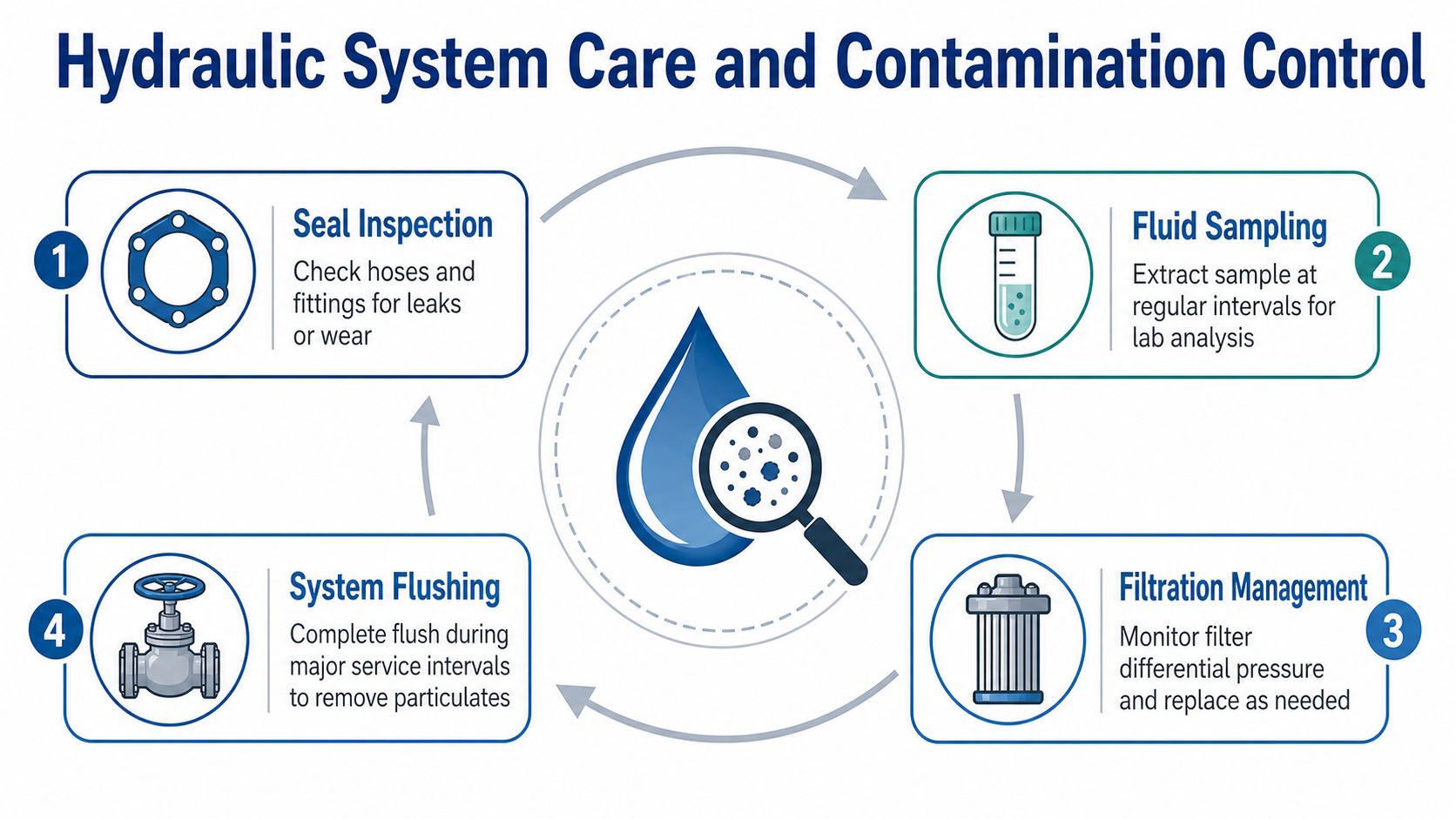
Filters should be selected for the circuit, flow, pressure, bypass arrangement and required cleanliness. A filter change based only on a calendar can waste service life, while ignoring differential pressure can allow restriction or bypass operation to persist. Record filter condition and investigate unusual loading rather than treating every dirty element as routine.
Fluid sampling adds evidence to the maintenance decision. Take samples from a consistent, representative point using clean equipment and label them with the asset, fluid type, operating hours and recent work. Trending particle condition, moisture and wear indicators can reveal a developing problem before a pump loses efficiency or a valve begins to stick.
Inspect hoses, seals and power units
Look for abrasion, flattening, exposed reinforcement, damaged clamps, cracked outer covers and evidence of movement at fittings. Replace hoses using the correct pressure, temperature, fluid compatibility, routing and bend-radius requirements. A hose that has survived one duty cycle isn't automatically suitable for another machine or attachment.
For gear pumps, check suction conditions, shaft seals, mounting, coupling alignment and abnormal noise. Power packs need attention to reservoir cleanliness, breather condition, cooling, electrical connections and relief-valve settings. Gear motors and flow dividers also require diagnosis based on actual symptoms, not automatic replacement.
Clean oil is a maintenance control. Every open port, transfer container and replacement hose is part of the contamination boundary.
Common Failure Modes and Troubleshooting Steps
Troubleshooting works best when technicians confirm the symptom before changing parts. A machine that is slow may have low flow, low engine speed, internal leakage, a restricted suction path or a control signal fault. Replacing the pump first can conceal the cause and send contaminated oil into a new component.
Hose leaks and bursts
Start by making the machine safe and identifying whether the defect is a burst, pinhole, fitting leak, abrasion point or seal failure. Check routing, clamps, bend radius, pressure rating and evidence of external impact. After replacement, inspect the surrounding structure for the reason the hose failed, flush contamination where necessary and complete a controlled pressure and function test.
Never check a suspected pinhole leak with a bare hand. Use suitable inspection methods and follow the site's safe system of work.
Cavitation and loss of pressure
Cavitation often presents as whining, vibration, foaming oil, sluggish movement or unstable performance. Check tank level, suction hose condition, inlet restrictions, breather operation, oil viscosity and pump rotation. Then verify measured pressure and flow at defined test points against the machine specification.
If pressure is low, check relief-valve condition and control settings before condemning the pump. If flow falls as the system warms, internal leakage may be increasing. Temperature, noise and test readings together provide a much stronger diagnosis than one symptom alone.
Sticking valves and overheating
A sticking spool can result from contaminated oil, damaged seals, incorrect assembly, corrosion or a mechanical alignment issue. Isolate the circuit, inspect the valve and confirm contamination condition before cleaning or replacing the element. Replacing a valve without addressing dirty oil transfers the failure to the replacement.
For an overheating power pack, check cooler airflow, oil level, relief-valve loading, pump condition, duty cycle and return-line restriction. A relief valve passing continuously can convert input power into heat while the operator experiences poor machine performance.
Connected-machine faults
Telematics can identify abnormal pressure, temperature or utilisation, but a warning still needs verification. Check sensor wiring, connectors, calibration status, software version, power supply and the physical condition of the hydraulic circuit. False-positive alarms can arise from a poor sensor location, a changed attachment, a calibration drift or a threshold that doesn't reflect the machine's real duty.
Rental fleets add another layer. Equipment moves between sites, operators and contractors, so dirt introduced during a hurried coupling change can create failures later. The handover inspection should record cleanliness, attachments, fluid condition, open alarms and defects, while the receiving team should confirm the machine's identity and service history before work begins.
Parts Selection and Sourcing for Reliable Repairs
A replacement part is only a reliable repair when it suits the complete hydraulic application. Check operating pressure, flow, speed, duty cycle, mounting, shaft, port arrangement, control method and fluid compatibility before ordering. A part that fits physically but is mismatched technically can cause repeat downtime, introduce contamination or create unsafe machine behaviour.
OEM components are often the right choice for safety-critical equipment, warranty-controlled repairs and systems that depend on defined calibration or software settings. Quality aftermarket parts can suit lower-risk applications where specifications are verified, supply is dependable and the supplier can provide application support. Base the decision on failure risk and total ownership cost, rather than catalogue price alone.
Match the component to the circuit
Use the machine record and hydraulic schematic before raising a purchase order.
| Component Type | Selection Criteria | Typical Applications |
|---|---|---|
| Gear pumps, unidirectional and reversible, Groups 0–3 | Displacement, pressure, rotation, shaft, mounting, ports and duty cycle | Mobile hydraulics, auxiliary circuits and compact power units |
| Gear motors | Displacement, speed, torque, rotation, drain requirements and mounting | Conveyors, winches, fans and auxiliary drives |
| Flow dividers | Flow range, accuracy, pressure, ratio and circuit layout | Synchronised actuators and multi-branch circuits |
| CETOP directional and proportional valves | Size, flow, pressure, solenoid, control signal, spool function and manifold compatibility | Directional control, metering and proportional movement |
| Filters | Flow, pressure, filtration rating, bypass, indicator and element availability | Return, pressure, suction and offline filtration |
| Gearboxes, clutches and bellhousings | Torque, ratio, input speed, mounting and alignment | PTO drives, reduction systems and pump interfaces |
| Couplings and manifolds | Shaft dimensions, misalignment tolerance, port layout and material | Pump drives, compact assemblies and integrated circuits |
Telematics records can improve the specification process. Use pressure, temperature, operating hours, attachment use and alarm history to check whether the replacement will suit the machine's current duty, particularly where a rental unit has moved between applications. UK safety requirements still depend on physical inspection, correct installation and documented testing. A telematics alert does not confirm that a part is safe to fit.
Stock intelligently
Rental operators need short turnaround times, yet holding every possible component ties up capital without guaranteeing the correct specification. Keep common seals, filter elements, hose fittings and documented emergency items where local availability reduces the consequence of failure. For larger pumps, valves, gearboxes and bespoke assemblies, use equipment records and failure history to decide whether a spare is justified.
Cross-reference by full specification, not appearance. Record the original part number, machine make and model, hydraulic schematic, photographs, dimensions and test results. This information helps a specialist supplier distinguish a genuine equivalent from a component that merely matches the mounting holes.
MA Hydraulics Ltd supplies gear pumps, gear motors, flow dividers, CETOP valves, filters, gearboxes, clutches, bellhousings, couplings and manifolds. It can also assemble Hydronit mini power packs or bespoke industrial power packs up to 11 kW, as described in its hydraulic component and power solution range. Application support is particularly useful where contamination control, circuit compatibility and post-repair testing matter as much as the part itself.
Justifying Preventive Maintenance with KPIs and Cost Analysis
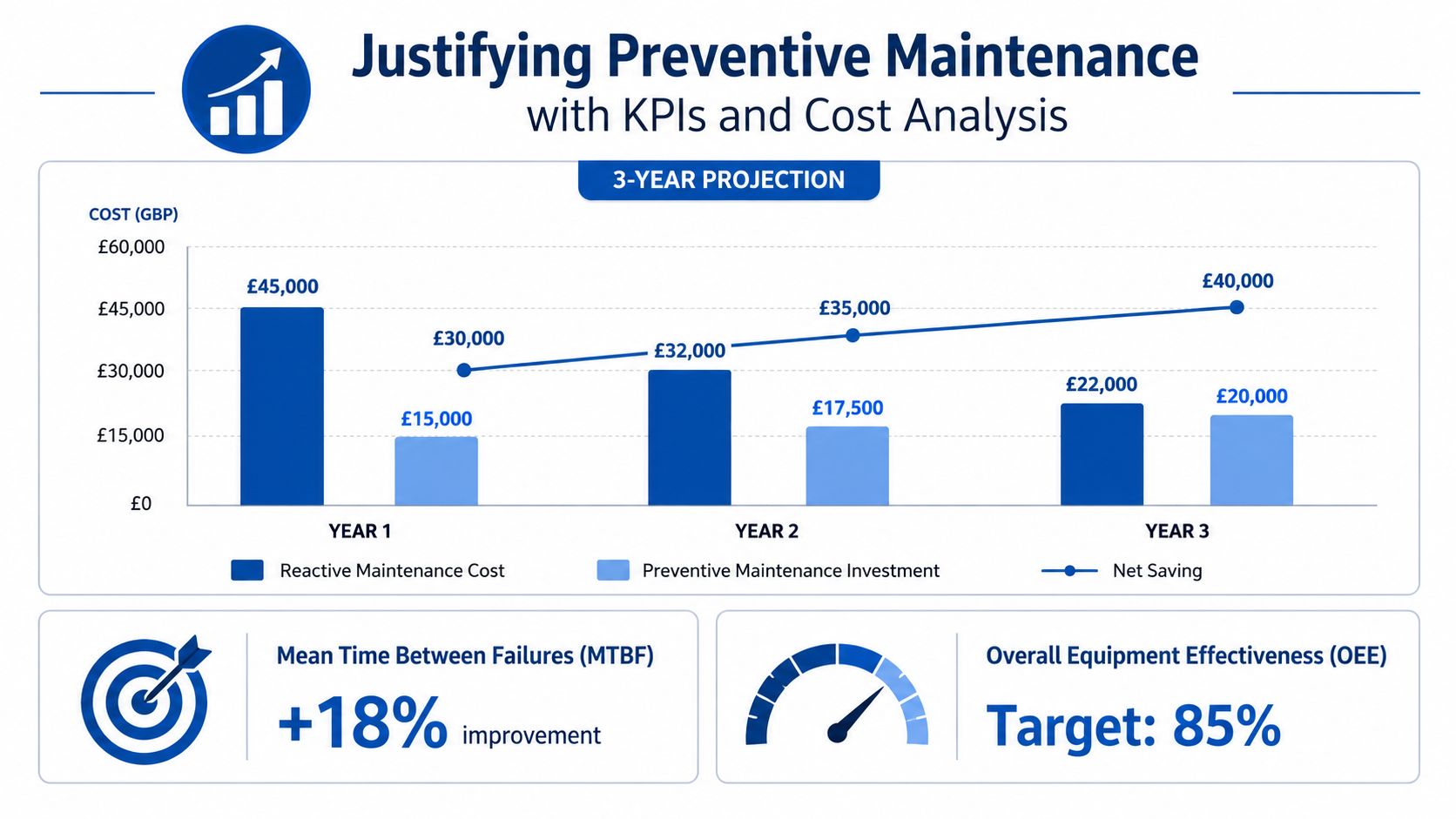
Preventive maintenance earns its place in the budget when the numbers describe the whole failure, not just the replacement part. A breakdown can consume technician time, emergency transport, expedited delivery, contractor support, production capacity and hire revenue. It can also expose the business to safety, environmental and contractual consequences.
Track a small set of measures consistently:
- Mean time between failures: Monitor how often each asset or component fails, then separate repeat defects from unrelated events.
- Scheduled-maintenance compliance: Record whether planned work was completed when due by operating hours and safety condition, not merely whether a job was eventually closed.
- Unplanned downtime: Measure lost availability and identify the failure mode, location, response time and repair duration.
- Contamination condition: Trend fluid-sample results, filter loading, moisture findings and repeat component failures.
- Defect closure: Track how long safety-critical findings remain open and whether the corrective action addressed the root cause.
A maintenance budget becomes easier to defend when each planned task has a failure it is intended to prevent. For example, a hose inspection protects against burst risk, oil sampling supports condition decisions, and scheduled filter replacement protects sensitive control elements. The business case should compare the predictable cost of inspection, labour, filters, sampling and planned parts with the uncertain cost of reactive recovery.
Rental fleets need a different calculation
UK plant hire value is forecast at £3.56 billion in 2025, with earthmoving and lifting equipment accounting for 68% of plant hire value, according to UK plant-hire market commentary. Those figures are projections and market estimates, but they underline the commercial importance of equipment availability in a rental-heavy environment.
Rental machines experience frequent transport, handovers, changing attachments, short-duty work and varied operator practice. A preventive programme should therefore include pre-hire inspection, post-return assessment, contamination checks at quick couplers, documented fluid top-ups and a decision on whether a defect is safe to defer. The right KPI is not workshop output. It's whether the fleet returns to service without transferring unresolved risk to the next customer.
Use a monthly management review to connect maintenance activity with operational outcomes. Show scheduled work completed, repeat failures, downtime by asset, critical parts consumed and defects awaiting action. This gives senior managers a clearer choice: fund controlled intervention now, or accept the operational and safety exposure created by delay.
Adapting Maintenance for Telematics and Connected Plant
Connected plant changes the maintenance record from a periodic snapshot into a stream of operating information. GPS automation, remote monitoring and predictive diagnostics can help teams identify trends in utilisation, temperature, pressure and fault behaviour. They don't remove the need for physical inspection. They add new failure points and new decisions.
UK-facing industry coverage describes telematics and real-time diagnostics spreading into mid-range plant, alongside interest in AI fleet monitoring, remote diagnostics and predictive maintenance tools at Bauma-linked events. The same Plantworx 2025 coverage reports manufacturing PMI at 45.1 in May 2025, with new orders contracting since summer 2024. Those conditions increase the value of targeted maintenance, although the figures describe a specific market context rather than a universal forecast.
Give digital alerts a mechanical response
Set ownership for every alarm. A high-temperature warning should generate a defined check of cooler condition, oil level, relief-valve loading, sensor accuracy and duty cycle. A pressure alarm should lead technicians to verify the sensor, test pressure at the correct point and inspect the hydraulic cause before replacing electronic hardware.
Sensor calibration, connector condition and software updates belong on the maintenance schedule. So do data governance questions. Fleet managers need to know who owns machine data, who can access it, how long records are retained and how technicians distinguish a genuine developing fault from a false-positive alert.
Connected rental plant needs a strong handover process. Confirm that telematics devices are reporting against the correct asset, that thresholds suit the attachment and duty, and that the next service trigger is based on verified operating hours. The strongest system combines digital evidence with competent hands-on inspection. It doesn't allow a dashboard to overrule a physical defect.
MA Hydraulics Ltd can support UK mobile plant and industrial hydraulic applications with component selection, hard-to-find part cross-references and bespoke power-pack solutions. Speak to the team on 01724 279508 today about a hydraulic maintenance problem, or use the MA Hydraulics contact page to send machine details, fault behaviour, photographs or test information.
If your fleet needs more dependable hydraulic repairs, contamination-control support or a correctly specified replacement assembly, contact MA Hydraulics Ltd. Call 01724 279508 today, or send a message through the contact page so the team can help you select components and power solutions suited to the actual mobile plant application.
