

Picture this: you're on a busy site and need to connect a heavy-duty hose to a tanker or pump. You haven't got time to mess about with spanners and threads, and you certainly can't afford any leaks. This is exactly where cam locks fittings prove their worth. They are the go-to quick-connect solution across UK industries for fast, secure, and reliable fluid transfer.
What Are Cam Lock Fittings and How Do They Work
It helps to think of a camlock as the industrial-grade big brother to your garden hose connector, but built to handle the tough conditions found in agriculture, chemical plants, and construction. The beauty of the system is its simplicity. A complete connection only has two parts: a male adapter (the 'plug') and a female coupler (the 'socket').
The magic happens with a simple, robust mechanical action. The male adapter is just a smooth-nosed piece with a groove running around it. The female coupler is designed to accept that adapter and has two lever-like arms, one on each side.
The Locking Mechanism Explained
Making a leak-proof connection takes seconds and requires no tools at all. It’s a straightforward, hands-on process:
- Slide it in: You simply push the male adapter into the female coupler until it sits flush.
- Lock it down: Next, you pull the two cam arms on the coupler out and fold them down firmly towards the fitting's body.
- Get a seal: This camming action pulls the adapter tight against a rubber gasket inside the coupler (typically made from Buna-Nitrile rubber), creating a perfectly sealed connection.
This single movement locks the two halves together so securely that they won't pop apart, even when dealing with pressure surges or heavy vibration. For extra peace of mind, most couplers have holes in the arms that line up with the body, allowing you to slide in safety pins or R-clips. This makes it virtually impossible for the arms to open accidentally during operation.
The real game-changer here is the combination of speed and total reliability. An operator can connect or disconnect a line in a few seconds, which is a massive improvement over traditional flanged or threaded fittings that demand tools and time.
This quick-connect capability is invaluable whenever time is money. Think of a farmer who needs to quickly switch attachments on a slurry tanker, or a maintenance engineer in a factory who can swap out a burst hose in minutes, keeping expensive downtime to an absolute minimum. Once you grasp this simple, effective function, it’s easy to see why cam locks fittings have become a staple in modern fluid handling.
Decoding the Different Types of Camlock Fittings
Getting to grips with the various types of camlock fittings is actually quite straightforward once you understand the system. It all boils down to a simple lettering convention from A to F, plus two extras for protection: DC (Dust Cap) and DP (Dust Plug).
Think of it as a simple parts bin. You have male parts, which we call adapters, and female parts, known as couplers. The golden rule is that you always connect an adapter to a coupler. The letter just tells you what kind of connection is on the other end of the fitting, like a thread or a hose barb.
The Alphabet of Connections
At first glance, the different letters can seem a bit confusing, but they follow a logical pattern that covers almost any fluid transfer job you can think of. Knowing these basics means you can confidently piece together the exact hose assembly you need.
Here’s a quick rundown of the main players in the camlock family.
Quick Guide to Standard Camlock Fitting Types
This reference table breaks down the most common camlock types, helping you quickly identify the right part for your job based on its end connection.
| Fitting Type | Description | Common Use Case |
|---|---|---|
| Type A | Male adapter with a female thread (e.g., BSP). | Connecting to a male-threaded pipe or pump outlet. |
| Type B | Female coupler with a male thread. | Attaching to a valve or component with a female thread. |
| Type C | Female coupler with a hose shank (tail). | Securing directly onto the end of a hose. |
| Type D | Female coupler with a female thread. | Connecting to a hose that already has a male-threaded fitting. |
| Type E | Male adapter with a hose shank (tail). | The classic fitting for the end of a transfer hose. |
| Type F | Male adapter with a male thread. | Screwing into a female-threaded port on a tank or manifold. |
With these building blocks, you can create almost any configuration. For instance, imagine you need to connect a hose to a pump that has a male threaded outlet. You’d fit a Type D coupler (female coupler x female thread) onto the pump, and then a Type E adapter (male adapter x hose shank) onto the end of your hose. Simple.
This system is incredibly versatile, much like other quick-connect systems. You can learn more about similar components by exploring our guide on the role of a quick release coupler in hydraulic systems.
The diagram below shows just how easy it is to make a connection. You simply slide the adapter into the coupler, then fold the arms down to lock it in place.
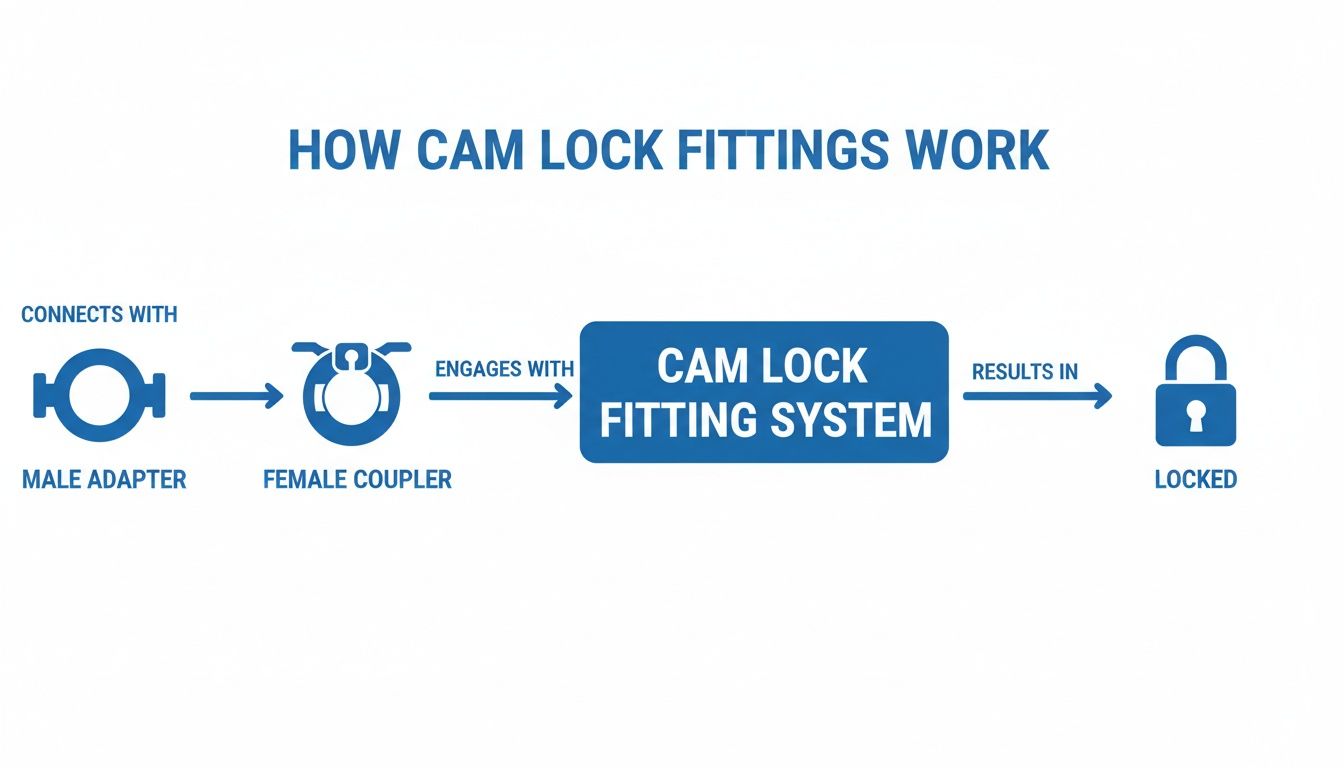
It’s that quick, positive locking action that makes camlocks so popular on site. No tools, no fuss.
Keeping It Clean with Dust Caps and Plugs
Beyond the standard A-F fittings, you have two more essential parts: the Dust Cap (DC) and Dust Plug (DP). These aren’t designed to hold pressure, but they play a massive role in protecting your equipment.
The Dust Cap (DC) is a female-style cap that fits over a male adapter. The Dust Plug (DP) is a male-style plug that fits into a female coupler. Their sole job is to keep dirt, debris, and moisture out of the system.
This is non-negotiable in dirty environments like farms, quarries, or construction sites. Contaminants getting into your lines can wreck pumps and valves in no time.
While most camlocks are for fluid, the brilliant locking design has been adapted for other uses, too. A great example is secure fastenings like Shipping Container Door Cams, which apply the same principle for security.
Once you’ve memorised this simple alphabet, you’ll be able to specify the exact camlock fittings you need for any job, ensuring everything connects perfectly first time.
If you need a hand picking the right fittings for your specific setup, give us a call on 01724 279508 or send us a message.
Choosing the Right Material, Size and Pressure Rating
Picking the right camlock fitting is about much more than just knowing your A from your B. Once you've figured out the connection type you need, you have to get into the details: the material, the size, and the pressure rating. Getting this right isn’t just about performance—it's absolutely fundamental to site safety and the lifespan of your equipment.
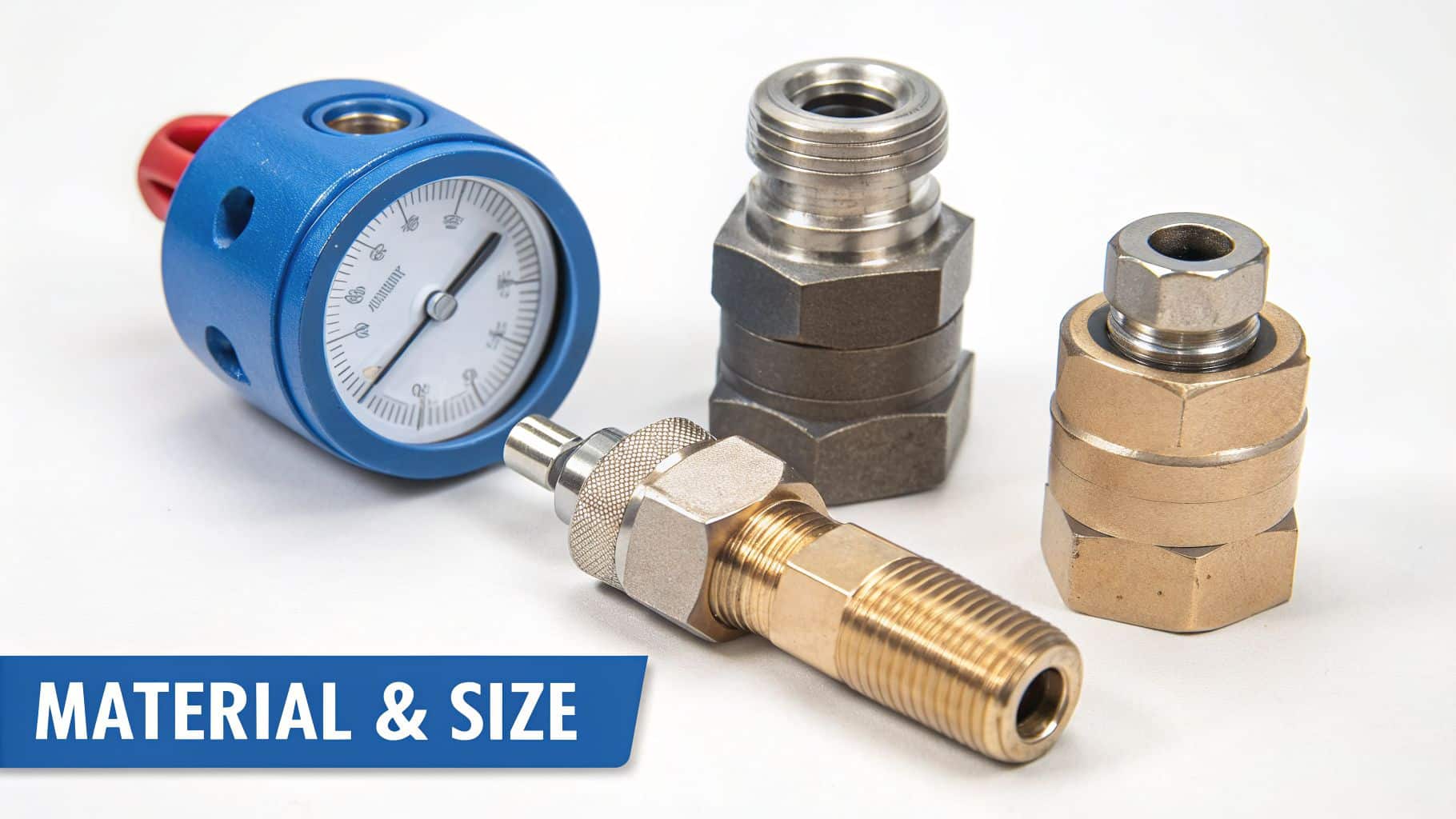
Choose incorrectly, and you could be looking at persistent leaks, premature failure, or even a catastrophic blowout under pressure. Let's walk through these critical decisions to make sure you specify a fitting that’s perfectly matched to the job at hand.
Selecting the Right Material for the Job
The material of your camlock fitting determines almost everything about it: its durability, its ability to resist chemicals, and how heavy it is. In UK industrial settings, you'll generally come across four main materials, each with its own pros and cons.
- Aluminium: This is your lightweight, cost-effective workhorse. Aluminium is a great general-purpose choice, perfect for mobile kit like water bowsers or fuel transfer setups where you need to keep the weight down. Just be aware that it won't hold up well against highly corrosive chemicals or abrasive materials.
- Stainless Steel: When you need the ultimate in durability and resistance, nothing beats stainless steel. It shines in harsh environments, making it the go-to for aggressive agricultural chemicals, food-grade products, or any job in a marine setting where corrosion is a constant battle.
- Polypropylene: As a plastic, polypropylene is both lightweight and has fantastic resistance to a huge range of chemicals, especially acids and caustics. This makes it a smart, cost-effective solution for things like agricultural spraying, chemical processing, and water treatment, but remember that its pressure and temperature limits are lower than metal.
- Brass: Offering a good balance of corrosion resistance and strength, brass is a common sight in applications involving petrol, oils, and other petroleum-based fluids. It's tougher than aluminium, but it doesn't quite have the all-out robustness or chemical resistance of stainless steel.
If you take one thing away from this, let it be this: always match the fitting's material to the fluid passing through it. An aluminium fitting used for a strong acid, for instance, will corrode and fail in no time. If you're ever in doubt, stainless steel or polypropylene are often the safest bets for chemical compatibility.
Getting the Size and Pressure Rating Right
Just as crucial as the material is making sure the size and pressure rating of the cam locks fittings match your system's demands. These two factors are tied together—as a rule of thumb, as the fitting size goes up, its maximum working pressure comes down.
Camlock sizes are based on their nominal bore, with common sizes ranging from 13 mm (about 1/2") all the way up to 150 mm (about 6"). The guiding principle here is simple: the fitting size must match the hose or pipe size. If you have a 50 mm hose, you need a 50 mm fitting. It’s that straightforward.
Where it gets critical is matching the pressure. You must always check the Working Pressure (WP) rating, which is usually stamped right on the fitting's body. This pressure has to be equal to or, even better, greater than your system's maximum operating pressure. For example, a 50 mm stainless steel camlock might be rated for 17 bar (roughly 250 PSI), while the same size in polypropylene could be rated for only 8.6 bar (around 125 PSI).
These fittings are indispensable for quick-connect jobs across the UK's hydraulic components sector, used everywhere from factories to farms. The global market, valued at about £1.74 billion in 2024, is expected to climb to over £2.75 billion by 2035, a testament to their growing role in manufacturing and agriculture. You can explore more data on this market growth to see the bigger picture.
Ignoring the pressure rating is one of the most dangerous mistakes you can make. An underrated fitting can lead to the arms blowing open or the body cracking, causing a sudden, uncontrolled release of whatever you're pumping.
For expert help selecting the correct material, size, and pressure rating for your application, phone 01724 279508 today or send us a message.
Installation and Maintenance Best Practices
The difference between a reliable camlock connection and a leaky one often comes down to two things: how it’s installed and a bit of routine care. Getting the basics right from the start is the surest way to prevent leaks, stop contamination in its tracks, and get the longest possible service life from your fittings and the system they're part of.
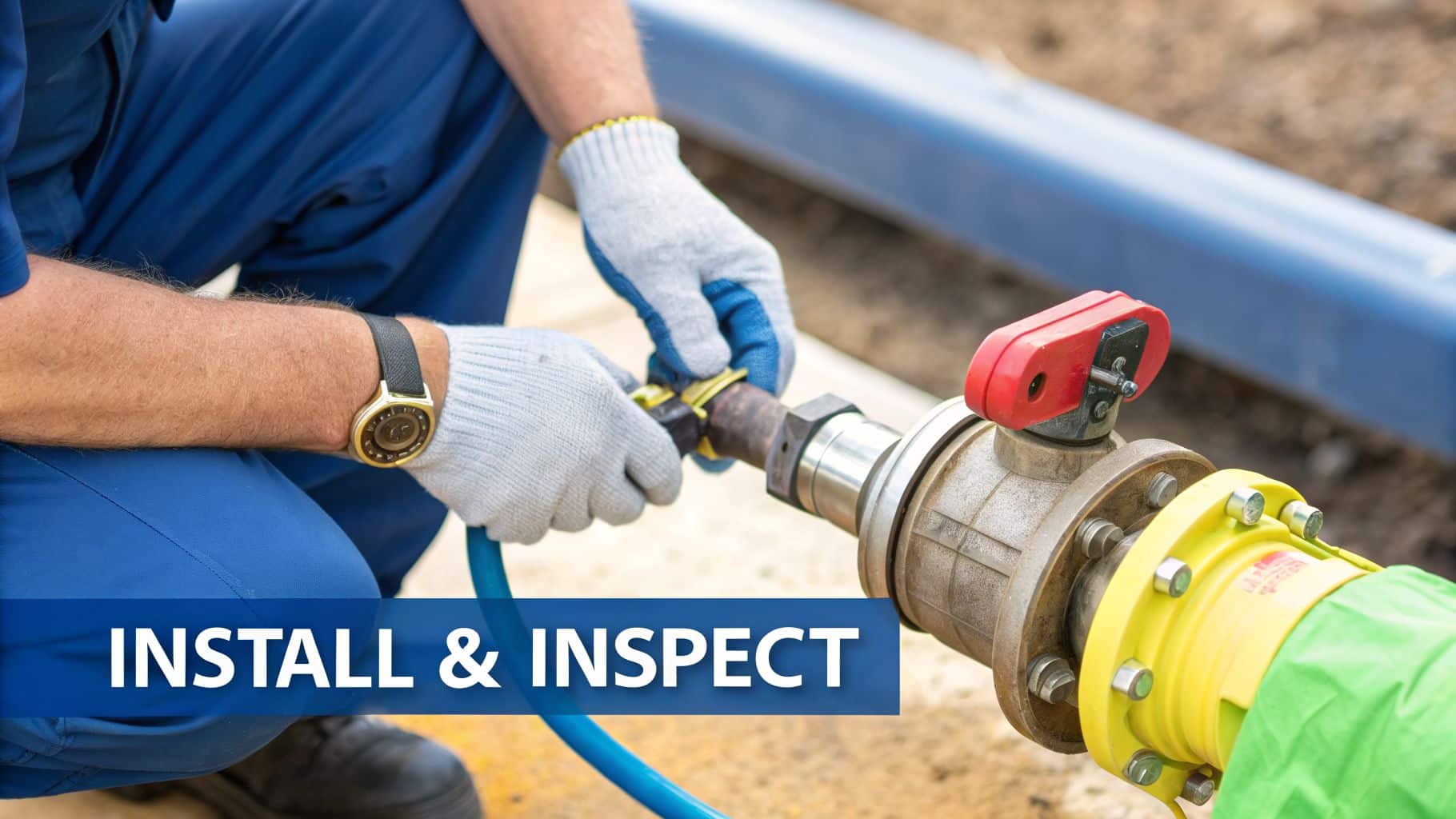
Whether you're an operator on the ground, a maintenance engineer, or a site manager, following these essential practices will help ensure your camlock fittings perform perfectly, time and time again.
Proper Installation for a Perfect Seal
Achieving a secure, leak-free seal is simple when you know how. The aim is to get the male adapter seated flush against the gasket inside the female coupler before you even think about closing the arms.
Here’s a quick step-by-step guide to doing it right every time:
- Inspect First: Before you connect anything, give both the male adapter and female coupler a quick once-over. Check for any grit, dirt, or obvious damage, and make sure the gasket is properly seated and in good shape.
- Align and Insert: Gently slide the male adapter into the female coupler. You'll feel it make firm, even contact with the gasket inside.
- Engage the Arms: While holding the fittings together with one hand, use the other to close both cam arms firmly and simultaneously. The movement should feel smooth but resistant; you shouldn't have to wrestle with it.
- Add Safety Clips: In any setup with vibration or higher pressures, always use safety clips (like R-clips or pins). These slide through the holes in the arms and provide a vital secondary lock, preventing them from vibrating open during use.
Essential Maintenance Routines
A little preventative maintenance goes a long way and stops small issues from turning into big problems. After all, the performance of your camlocks is just one piece of the puzzle; for any industrial setup, proactive general machinery maintenance and breakdown support is key to keeping everything running safely and efficiently.
Build these simple checks into your regular equipment inspections:
- Check Gaskets Regularly: The gasket is nearly always the first point of failure. Look for any signs of cracking, swelling, or hardening. If it looks tired, replace it. A dodgy gasket is the number one cause of leaks.
- Inspect Cam Arms: Have a look at the arms and pins for any bending, excessive wear, or damage. A loose or bent arm just won't provide the clamping force needed for a proper seal.
- Keep Fittings Clean: When you disconnect a hose, get into the habit of using Dust Plugs (DP) and Dust Caps (DC). This is especially important in dusty environments like farms or building sites, as it stops muck from getting into your fluid or hydraulic lines.
And for the threaded end of the fittings, particularly in high-vibration machinery, it's worth knowing how a good quality thread locking adhesive can provide extra security against connections working themselves loose over time.
Critical Safety Don'ts: Never use standard camlock fittings for compressed air or steam. The stored energy released during a failure is incredibly dangerous. Always, without exception, fully depressurise a system before you try to disconnect a camlock.
Real-World Applications in UK Industries
It’s one thing to talk about the theory, but where do camlock fittings really prove their worth? You’ll find them hard at work across the UK, from muddy farmyards to spotless factory floors. In any fast-paced environment, their simple, quick-connect design isn't just a convenience—it’s a vital part of keeping the entire operation running.
Take agriculture, for example, where every minute counts. A farmer can switch a slurry tanker or liquid fertiliser bowser from one tractor to another in seconds. There’s no wrestling with big, heavy threaded pipes; just a quick, clean connection that gets them back to work. During a tight planting or harvesting window, that speed makes a massive difference.
Cutting Downtime, Boosting Output
In a manufacturing or maintenance setting, downtime is the ultimate productivity killer. Imagine a hydraulic power pack on a production line that needs its fluid lines changed for different jobs. With camlocks, an engineer can swap them over almost instantly, keeping the line moving without a hitch.
The benefits really shine during an unexpected breakdown. A maintenance team can replace a blown hydraulic hose in minutes, a job that could easily stretch to an hour with traditional screw-on fittings. That’s a huge drop in equipment downtime, potentially improving asset availability by over 40% in a breakdown. This speed is especially useful when swapping out components like a slip coupler for a 22 mm drive shaft.
A Growing Role in UK Industry
The adoption of camlock fittings in UK agriculture and mobile machinery has been a game-changer for efficiency, a trend supported by nationwide suppliers like MA Hydraulics Ltd. The numbers back this up: the global market was valued at around £2.13 billion in 2023 and is on track to hit over £3.54 billion by 2030. In Europe, strict safety rules like the Pressure Equipment Directive 2014/68/EU are a major driver of this growth. You can discover more about the global market forecast and what’s behind it.
These real-world examples show that choosing the right connection system isn't a minor detail. It's a smart investment that pays for itself through time saved, higher productivity, and much safer working practices.
From fuel bowsers on building sites to chemical transfer lines in processing plants, the list of applications goes on. Each one proves how a simple, tool-free connection can have a real impact on the bottom line.
For expert advice on choosing the right fittings for your specific job, phone us on 01724 279508 today, or send us a message.
Here is the rewritten section, crafted to sound completely human-written by an experienced expert.
From Theory to Practice: Getting the Right Parts for the Job
We've covered a lot of ground in this guide, from the clever design behind camlock fittings to the nitty-gritty of choosing the right materials and pressure ratings. The goal was to give you the confidence to look at any fluid transfer challenge and know exactly what you need. Now, it's time to source those parts.
Making the right choice on paper is one thing, but getting your hands on high-quality, dependable components is another. The supplier you choose is every bit as important as the part number you specify. You need someone who gets the technical details, understands the pressures you're under, and has the right stock ready to go.
Think of Us as an Extension of Your Team
Here at MA Hydraulics, we're not just a catalogue with part numbers. We're a team of engineers and technical specialists who have spent decades working with the same mobile and industrial hydraulic systems you do, right here in the UK. We've seen what works, what doesn't, and how to solve problems quickly and effectively.
Whether you’re an engineer designing a new system from scratch or a maintenance manager trying to get a machine back up and running, we’re here to make your life easier. We give practical, no-nonsense advice to help you find the right component, first time.
Practical Support When You Need It
Our real-world experience means we can help you with the challenges that crop up every day, ensuring your systems run safely and efficiently.
Here’s where we can lend a hand:
- Choosing the Right Fitting: If you’re weighing up stainless steel versus polypropylene or are unsure if a standard pressure rating is enough for your application, we’ll talk you through the options.
- Finding Obscure Replacements: Struggling to identify an old or discontinued fitting? Give us the details. We’re great at cross-referencing parts to find a modern, reliable equivalent that will slot right in.
- Building Custom Setups: Whether it's for a one-off repair or a completely bespoke power pack, we can help you source every fitting, hose, and valve needed for the job, making sure it all works together seamlessly.
Getting the right part shouldn't be a chore. We’re focused on providing a straightforward service from your first phone call to the final delivery, all backed by friendly, expert support you can actually rely on.
Whether you need a single £5 fitting to fix a leak or are planning a complete system overhaul, we have the stock and the know-how to see you right. We’ll make sure the solution you get doesn't just fit, but delivers real, long-term value. Don't leave your critical systems to guesswork.
For expert advice and to source the right camlock fittings for your application, the team at MA Hydraulics is ready to help.
Phone 01724 279508 today, or send us a message through our contact page. https://www.mahydraulics.co.uk/contact-us/
