
When you’re deep into designing or maintaining a hydraulic system, it’s all too easy to fixate on the big-ticket items—the pumps, the valves, the actuators. But what about the small, often-overlooked components holding it all together? The humble 10mm pipe clip, for instance, does far more than just keep your pipework tidy; it’s a critical component for ensuring safety, performance, and a long service life.
The Critical Role of 10mm Pipe Clips in System Integrity
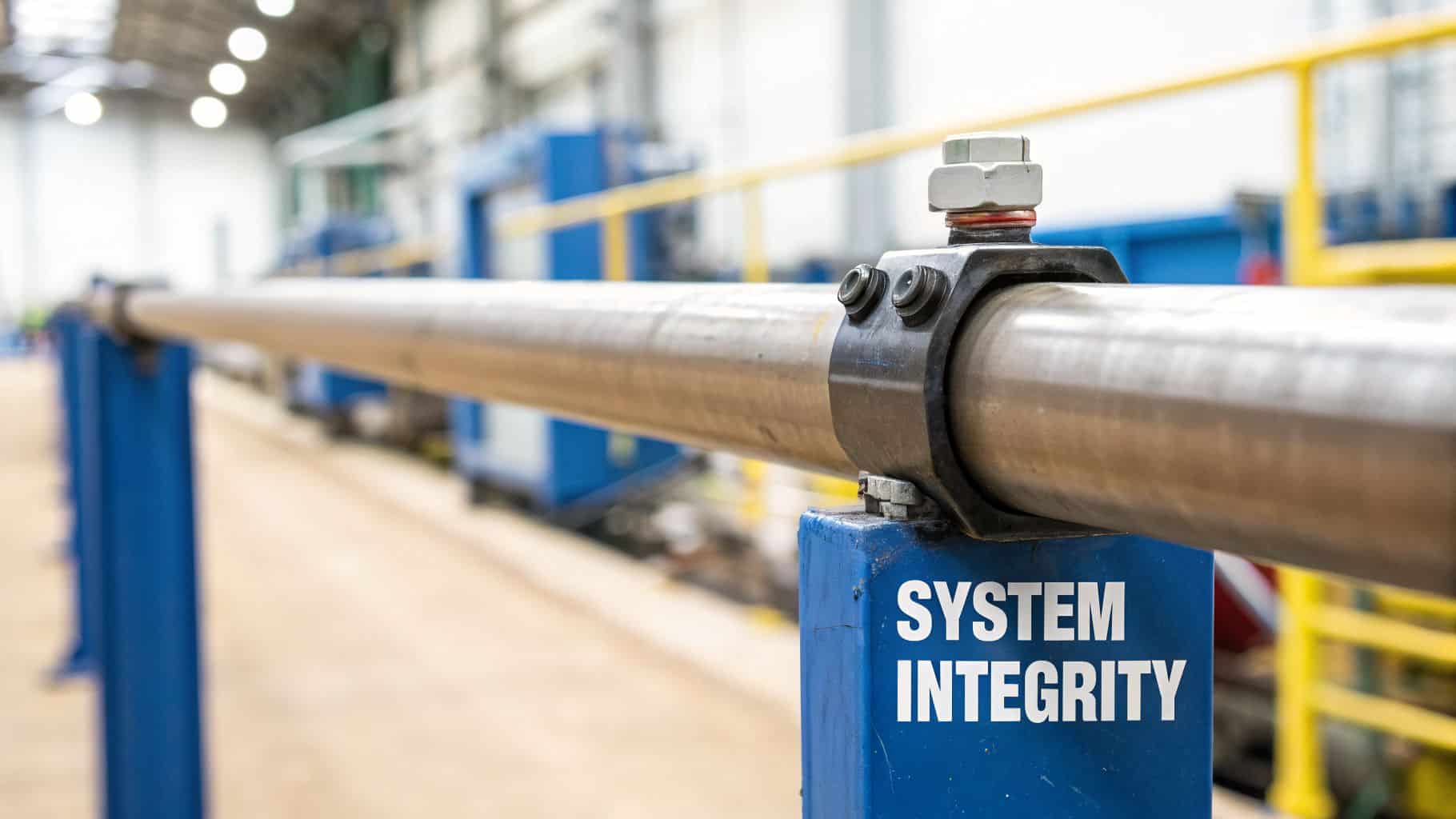
It’s a common mistake to see a pipe clip as just a simple bracket. Its real job is much more complex. These are purpose-engineered components designed to counteract a whole host of destructive forces that, if left unchecked, can bring an entire system to a grinding halt. Without the right clamping, your pipework is exposed to risks that lead directly to expensive failures and unplanned downtime.
More Than Just a Bracket
A properly chosen and installed pipe clip is your first and best line of defence against the harsh realities of operation. Think about all the work it's doing behind the scenes:
- Vibration Damping: Vibration is a constant enemy in hydraulic systems, particularly on mobile equipment or industrial power packs. Quality pipe clips absorb and isolate these vibrations, stopping them from travelling down the line and weakening connections or damaging sensitive components.
- Shock Absorption: Sudden pressure spikes or mechanical jolts can send powerful shockwaves through pipework. A solid clip holds the pipe securely in place, preventing the violent movement that can cause catastrophic damage.
- Thermal Management: As temperatures change, pipes naturally expand and contract. Clips must provide a firm anchor point while still allowing for these tiny, controlled movements. This prevents stress from building up at fittings and joints, which is a common point of failure.
- System Organisation: Let's not forget the basics. Neatly routed and secured pipework isn't just about aesthetics; it makes the system far easier to inspect, maintain, and troubleshoot, creating a safer and more efficient work environment for everyone.
The Cost of Neglect
For any design engineer, MRO team, or OEM, the minor cost of a high-quality pipe clip is nothing compared to the potential fallout from a failure. Uncontrolled vibration is one of the leading causes of metal fatigue, which eventually leads to cracks and leaks that can shut down production entirely.
It's no surprise that the demand for reliable clamping is growing. The global industrial pipe clamps market, which includes 10mm pipe clips, was valued at around £3.32 billion in 2026 and is forecast to hit £4.08 billion by 2035. With Europe and the UK being key markets, it’s clear that dependable piping infrastructure is seen as essential across every sector, from manufacturing to wastewater management. You can find more detail on these projections in the industrial pipe clamps market growth report on businessresearchinsights.com.
Choosing the right 10mm pipe clip is a non-negotiable step for anyone serious about building reliable, high-performance systems. It is an investment in the long-term integrity and safety of your equipment.
Knowing how to select and install the correct clip for the job is a fundamental skill. It’s what ensures these small components have a massive positive impact on your system's overall performance.
Choosing the Right Material for Your 10mm Pipe Clips
Picking the right material for your 10mm pipe clips is a bit like choosing the right tyres for a car. It’s a decision that directly impacts performance, safety, and how long your setup will last. A standard plastic clip that’s perfectly happy indoors will quickly turn brittle and fail if you expose it to chemicals, high heat, or the sun. Getting this choice right from the start is absolutely crucial for the reliability of the entire system.
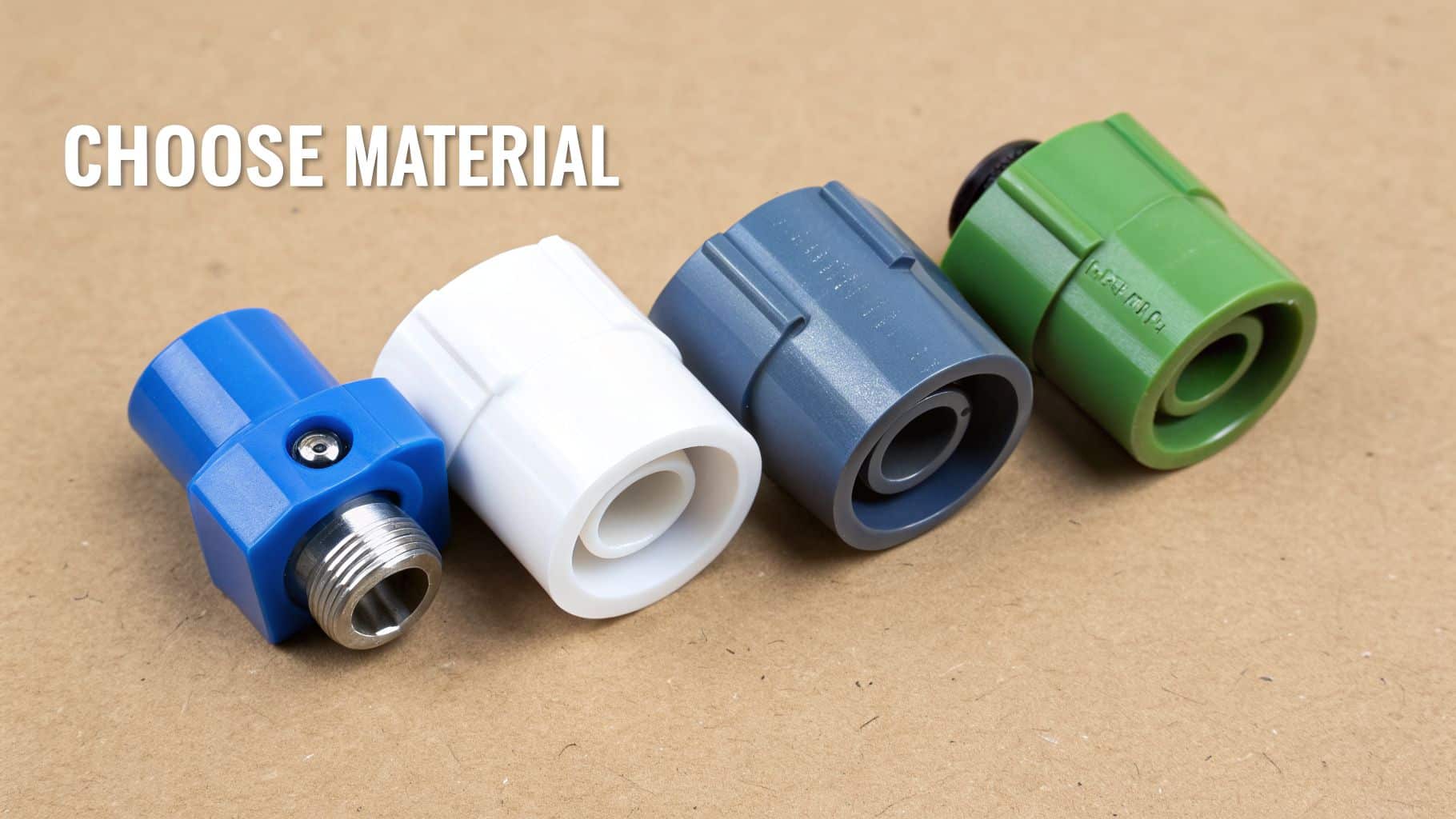
The decision isn’t just about the clip itself; it's about the world it has to live in. You need to think about every factor, from the fluid inside the pipe to the ambient conditions of the workshop or the field. Let's walk through the most common materials so you can specify with confidence.
Polypropylene (PP) The Versatile Standard
For good reason, polypropylene is the workhorse material for most standard-duty pipe clips. It hits a sweet spot, offering a fantastic balance of durability, chemical resistance, and value for money. This makes it the default choice for a huge range of general-purpose jobs.
Think of it as the go-to solution for any indoor or protected environment. It does a brilliant job securing low-pressure hydraulic return lines, pneumatic tubing, or water pipes inside a factory.
- Good Chemical Resistance: Stands up well to the common oils, greases, and solvents you’d find in most industrial settings.
- Cost-Effective: Polypropylene clips are very budget-friendly, which is a massive plus for large-scale installations where cost is a driving factor.
- Operating Temperature: Generally happy in a temperature range from -30°C to +90°C.
But here's its Achilles' heel: polypropylene has poor resistance to ultraviolet (UV) light. If you put a standard PP clip in direct sunlight, it will become brittle and eventually crack. This compromises its grip and leads to failure. For that reason, it is unsuitable for any outdoor applications unless it's specifically marked as UV-stabilised.
Polyamide (PA) for Tougher Conditions
When you need to step things up a gear, particularly for outdoor use, Polyamide (you probably know it as Nylon) is an excellent choice. Polyamide clips are inherently tougher and more resistant to abrasion and impact than their polypropylene cousins.
Their real advantage is superior resistance to the elements. Many 10mm pipe clips made from Polyamide are UV-stabilised, making them the perfect fit for agricultural machinery, construction equipment, and other mobile applications that live outdoors. They won’t degrade or lose their strength, even under constant sun.
For any equipment that operates outdoors, specifying a UV-stabilised Polyamide or a metal clip isn't just a recommendation—it's essential for long-term safety and reliability. A standard plastic clip will not suffice.
Stainless Steel for Ultimate Protection
When your application demands the absolute best in strength and corrosion resistance, nothing beats stainless steel. These clips become non-negotiable in environments where hygiene, aggressive chemicals, or extreme conditions are part of the daily routine.
Think about these scenarios where only stainless steel will do:
- Marine Environments: Its brilliant resistance to salt spray and moisture prevents rust on ships or coastal machinery.
- Food and Beverage Processing: Stainless steel is easy to sanitise and doesn’t harbour bacteria, so it’s essential for meeting strict hygiene standards.
- Chemical Plants: It can handle exposure to harsh chemicals and acids that would eat through plastic in no time.
- High-Temperature Systems: It holds its shape and strength at temperatures well beyond the limits of any plastic.
Yes, the initial cost is higher—a single 10mm stainless steel clip might set you back £1.50 or more, compared to pennies for a plastic one. But in these demanding roles, that investment pays for itself through sheer longevity and safety.
By carefully matching the material to your specific operating environment, you ensure your 10mm pipe clips provide a secure, reliable, and long-lasting solution for your pipework.
For expert guidance on selecting the perfect material for your application, phone 01724 279508 today, or send us a message.
Getting the Sizing and Specification Spot-On
You'd think choosing a 10mm pipe clip would be simple, but there's a common and costly mistake right in the name. This isn't just a bit of plastic or metal; it's a precision-engineered component. Its one job is to securely hold a pipe or tube with a 10mm outside diameter (OD).
In the high-pressure, high-vibration world of hydraulics, a loose fit isn’t a minor issue—it's a catastrophic failure waiting to happen. Get it wrong, and you're setting yourself up for serious problems down the line.
This need for precision is non-negotiable. A clip that's even a fraction of a millimetre too big lets the pipe vibrate, which leads to metal fatigue, wear, and eventually, leaks. Go too small, and the clip will pinch or crush the pipe wall, restricting flow and creating a dangerous weak point. This is exactly why accurate measurement is the first and most critical step.
Measuring for Millimetre-Perfect Accuracy
Guesswork has no place in hydraulics. The only reliable way to know your pipe's true OD is with a set of digital or vernier callipers. A tape measure simply won't cut it.
- Start with a clean pipe. Make sure there are no burrs, paint, or dirt that could throw off your reading.
- Gently close the calliper jaws around the outside of the pipe. Don't force them.
- Take a few readings around the pipe and along its length to check for any warping or inconsistencies.
- The number you see is the Outside Diameter (OD). This is the number that your pipe clip must match.
It’s that simple. If your pipe measures 10mm OD, you need a 10mm pipe clip. That single measurement drives the entire selection process.
Of course, clips are just one part of the puzzle. For a deeper dive into the principles of ensuring your whole system is correctly sized, this article on choosing the correct pipe size is a great resource.
Standard vs. Heavy-Duty Series
Once you’ve confirmed the 10mm OD, you need to think about the application's demands. Not all 10mm clips are built the same. They generally fall into two categories: a standard-duty series (often called Group 1) and a heavy-duty series. Think of it like the difference between a seatbelt in a family car and a five-point harness in a racing car.
-
Standard-Duty Clips: These are your go-to for lower-pressure lines with minimal vibration. They’re perfect for return lines, drain lines, or many pneumatic systems where you need a secure hold without the over-engineering of a heavy-duty clamp.
-
Heavy-Duty Clips: These are built for the tough jobs. They have a much beefier body, often with thicker metal top and bottom plates, designed to handle high-pressure hydraulic lines and systems with intense vibration or mechanical shock.
The 10mm clip has become a workhorse in both domestic plumbing and industrial fields across the UK. In fact, a popular product like the Talon Single Hinged Pipe Clip in 10mm is a market leader, made from tough polypropylene with a maximum operating temperature of 85°C and a recommended fitting space of 500mm. Its widespread use shows just how common this pipe diameter is.
Matching the clip's duty rating to your system’s operating pressure is just as crucial as matching the size. Using a standard-duty clip on a high-pressure line is a recipe for disaster. It simply won't provide the clamping force needed to control vibration and prevent movement.
This principle of matching components extends to the whole system. When you're dealing with hydraulic connections, everything has to work together. For instance, knowing how to pair different thread types is a fundamental skill. We cover this in our guide on 1/4 BSP to metric conversions. By getting both the size and the duty rating right, you guarantee a perfect fit that ensures safety and long-term reliability.
For expert help with your specification, give us a call on 01724 279508 today, or send us a message.
Installation Best Practices: Getting It Right First Time
You've done the hard work of selecting the perfect 10mm pipe clips. Now comes the part where it all comes together. Getting the installation right is every bit as important as the clip itself—this is where you turn a good specification into a reliable, long-lasting system. Let's move past guesswork and look at what it takes to secure your pipework properly.
Think of a pipe clip not just as a static bracket, but as an active part of your system's support structure. A proper installation manages dynamic forces, prevents future headaches, and ensures everything works as it should, without creating new stress points.
How Far Apart Should You Space Your Clips?
One of the first questions we get is about spacing. Put clips too far apart, and the pipe will sag under its own weight, straining fittings and causing potential leaks. Bunch them too close together, and you’re just wasting money and time on parts you don’t need.
So, what's the magic number? Well, there isn't one. The right distance is a balancing act that depends on a few key things:
- Pipe Material: A flexible nylon or plastic tube needs support far more frequently than a rigid steel or copper pipe to stop it from drooping.
- System Pressure: Higher pressures exert greater force on the pipe walls. Closer spacing is needed to keep the pipe firmly in place and prevent movement.
- Vibration Levels: For machinery that rattles and shakes—like mobile plant equipment—you need to close the gap between clips. This helps to absorb and control the vibration before it can cause damage.
- Operating Temperature: Pipes expand and contract with heat. Your clip spacing has to accommodate this thermal movement without putting the entire run under stress.
As a rule of thumb, for a standard 10mm pipe in a low-vibration setting, a spacing of around 500mm is a good starting point. But this is just a guide—always check the manufacturer's data sheet for the specific clips you're using, and adjust for your unique conditions.
Before you even pick up a spanner, the groundwork of sizing and selection needs to be spot on. This process is a crucial prerequisite for a successful installation.
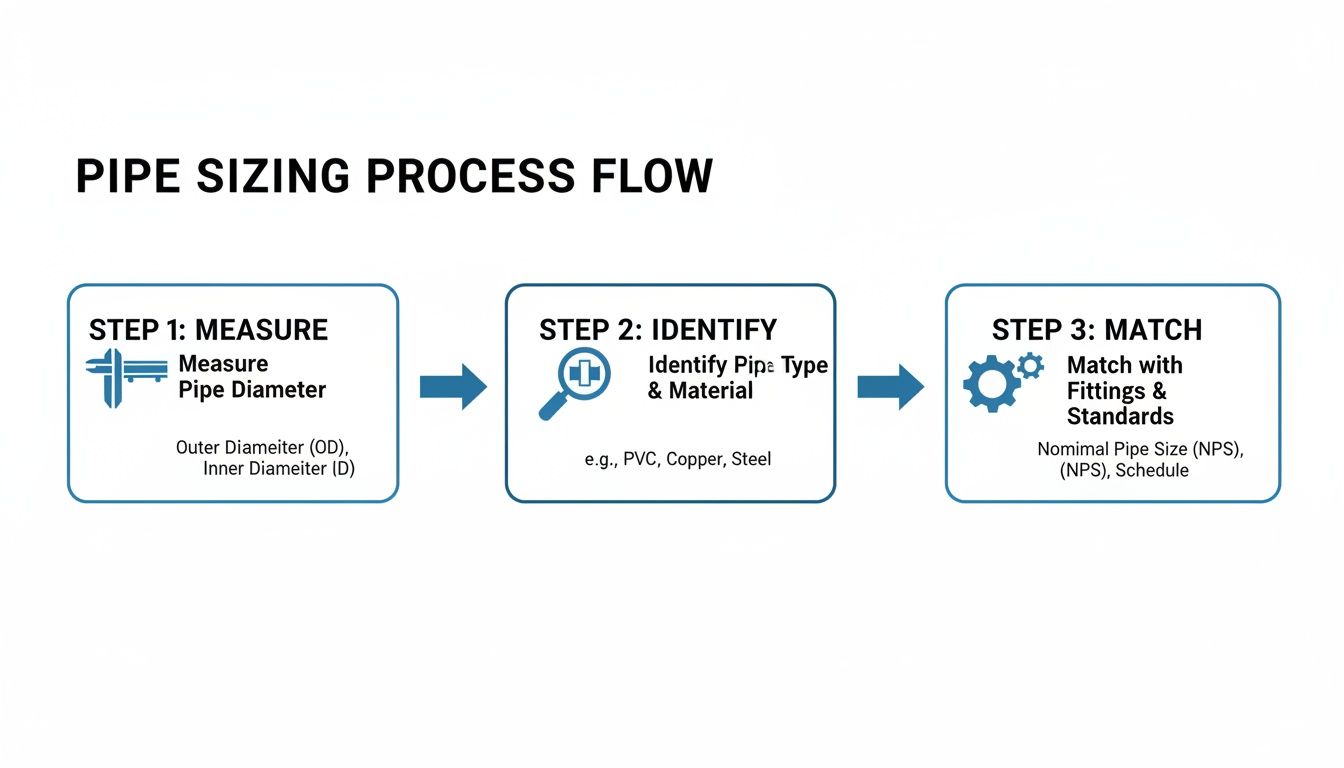
As you can see, it's a logical flow: get an accurate measurement, know your pipe's properties, and match it to the right clip standard. Only then are you ready to install.
Mounting Methods and Why Fasteners Matter
The clip is only as strong as its anchor point. How you fix it to the chassis or structure is critical. Common methods include bolting directly to a surface, using weld plates on steel fabrications, or mounting to DIN rails for a neat, adjustable layout.
No matter which method you go for, pay close attention to the fasteners. Always use high-tensile bolts or studs and torque them correctly. A loose bolt lets the whole assembly vibrate, completely defeating the purpose of the clip.
But be careful not to go the other way. Overtightening a bolt can be just as bad, if not worse. You risk crushing the plastic clip body, stripping the threads, or even warping the mounting surface, creating a hidden weak spot that’s just waiting to fail.
For that extra peace of mind, especially in high-vibration environments, a dab of thread locking adhesive on the fastener threads is a great way to stop them from working loose over time.
Taming Vibration with Cushion Clamps
In hydraulic systems, vibration isn't just an annoyance; it's a destructive force. When a standard pipe clip isn't enough to handle the chatter, it's time to bring in cushion clamps. These feature an elastomer insert that acts like a shock absorber for your pipework.
The soft lining grips the pipe firmly but gently, isolating it from the rigid outer clamp. This simple design is brilliant at soaking up vibrations, stopping them from travelling through the machine and protecting welds and sensitive components from fatigue failure.
Getting these installation details right is the foundation of a good preventive maintenance approach. It’s how you avoid the sag, resonance, and leaks that lead to expensive downtime.
If you're facing a tricky installation or need expert advice for your application, give us a call on 01724 279508, or send us a message and we'll be happy to help.
Common Mistakes to Avoid With Pipe Clips
Even the best technicians can get caught out by simple mistakes when fitting 10mm pipe clips. It's easy to see them as a minor detail, but a small error here can snowball into major system failures, leading to expensive rework, downtime, and even safety risks.
Think of this as a pre-flight check for your hydraulic installations. By learning from the common pitfalls I’ve seen in the field, you can ensure your systems are built to last right from the start.
Forgetting to Match the Clip to Its Environment
One of the most frequent and costly mistakes is grabbing the wrong material for the job. A standard polypropylene clip might seem like a good, cheap option, but it can be a ticking time bomb if the working environment is harsh.
I’ve seen it happen time and again on outdoor equipment. A standard poly-prop clip looks perfectly fine on day one, but it's not designed to handle the sun. Over time, UV radiation makes the plastic brittle, and a crack is inevitable.
The Fix: Always, always specify a material that can handle the operating conditions. For anything outdoors, you need a UV-stabilised material like Polyamide (Nylon). For maximum durability and peace of mind, especially in coastal or demanding locations, go for Stainless Steel. It simply won’t degrade.
In corrosive or wash-down areas, stainless steel is the only sensible choice. I’m talking about food processing plants, marine applications, or chemical facilities. Plastic clips just can't stand up to aggressive cleaning agents and constant moisture; they will fail. Stainless steel won’t rust or weaken, protecting the integrity of your entire system.
Getting the Tightening Torque Wrong
The "tighter is better" mindset is a dangerous trap when it comes to pipe clips 10mm. Both over-tightening and under-tightening create their own set of problems, and getting the balance right is about precision, not brute force.
- Over-tightening: It’s tempting to give it that one extra turn, but this can crush the body of a plastic clip, creating micro-fractures that will eventually cause a total failure. You can also crimp the pipe itself, restricting flow.
- Under-tightening: A loose clip is just as bad. It allows the pipe to vibrate freely, which completely defeats the purpose of clamping it in the first place. This movement creates enormous stress and fatigue on joints and fittings down the line.
The Fix: Use a torque wrench. It’s the only way to be sure. Always tighten the fasteners to the manufacturer's exact specifications. This ensures the clip delivers the right clamping force without damaging the clip or the pipe. For an extra layer of security on high-vibration machinery, a dab of thread-locking compound on the bolt is a great pro tip. Reducing uncontrolled movement is also key, which is where solutions like our retractable hose reels can help manage lines and minimise stress points.
Ignoring Bulk Purchase Savings
Balancing quality and cost is part of the job. A common oversight, particularly for MRO teams and smaller OEMs, is buying clips in small, reactive batches. This approach feels convenient but racks up huge, unnecessary per-unit costs. The UK market for components like 10mm pipe clips is set up to reward forward planning.
The price of these vital parts drops significantly with volume. For example, buying a single clip at retail might cost you £4.22. But if you buy just 20 units from a distributor, the price can fall to around £0.05 each. Scale that up to a box of 100, and you could be paying as little as £0.03 per clip. That’s a massive difference. To see how this works in practice, you can explore detailed examples of volume-based discounts on mpmoran.co.uk.
The Fix: Plan your inventory and consolidate your orders. By purchasing 10mm pipe clips in bulk instead of on an as-needed basis, you can achieve substantial cost savings that go straight to your bottom line, all without ever compromising on quality.
For help with your specification or to discuss bulk pricing, give us a call on 01724 279508 today, or send us a message.
Your Essential Checklist for Specifying 10mm Pipe Clips
To make sure your next project runs smoothly, we’ve put together a straightforward checklist. Think of it as a final walkthrough before you order your 10mm pipe clips, ensuring you’ve covered all the important details.
Following these steps is a simple way to avoid common mistakes and specify your parts with confidence. It’s about getting the right clip for the job, one that delivers the performance, safety, and reliability your system depends on.
Step 1: Confirm Your Pipe’s Outside Diameter (OD)
First things first, and this one’s the absolute deal-breaker: you need to know your pipe’s exact outside diameter. Don't guess or eyeball it with a tape measure. The only tool for this job is a pair of callipers.
- Is the true OD exactly 10mm? A measurement of 9.8mm or 10.2mm might seem close enough, but it guarantees a poor fit. The clip and the pipe OD have to be a perfect match.
- Have you checked it in a few places? Measure the pipe at several points along its length to make sure it's perfectly round and not warped.
Getting this step right is non-negotiable. The wrong size will lead to problems, whether it's rattling and vibration from a loose clip or stress and damage from one that's clamped down too tight.
Step 2: Define the Operating Environment
Next, think about where these 10mm pipe clips will be installed. The conditions surrounding the clip are just as critical as the mechanical forces it will handle. Answering these questions will point you straight to the right material.
- Will it be used indoors or outdoors? For any outdoor application, you absolutely must choose a UV-resistant material like Polyamide or Stainless Steel to stop sunlight from making it brittle.
- What temperatures will it face? Always check the material's operating limits. Standard Polypropylene, for example, is generally fine up to about +90°C, but Stainless Steel can handle far more extreme heat.
- Are there chemicals or corrosive agents nearby? Think hydraulic fluids, cleaning solutions, salt spray, or anything else aggressive. In chemical-heavy or wash-down areas, stainless steel is often the only truly safe option.
Step 3: Assess Pressure and Vibration Levels
Now, let's look at the forces at work inside the pipe. This will tell you whether a standard clip will do the job or if you need to step up to a heavy-duty series.
- What’s the maximum system pressure? High-pressure hydraulic lines demand the superior grip and solid construction you only get from a heavy-duty series clip.
- How much vibration are you dealing with? On mobile machinery, generator sets, or systems with rapid pump cycles, a heavy-duty clip is vital for controlling movement and preventing fatigue failure. For extreme vibration, it's worth looking into cushion clamps.
By running through this checklist, you can stop guessing and start sourcing the perfect 10mm pipe clips for your application every single time. This simple process cuts out the risk of costly errors and ensures top performance and safety from day one.
Choosing the right component is crucial for the longevity of your entire system. If you need a hand with your specification or just want to talk through your requirements with an expert, our technical team is here to help.
Give us a call on 01724 279508 today, or send us a message through our contact page.
Your 10mm Pipe Clip Questions, Answered
Over the years, our technical team has fielded just about every question you can imagine when it comes to pipe clips. Here are straight-talking answers to some of the most common queries we get from engineers and maintenance pros out in the field.
What's the Real Difference Between Standard and Heavy-Duty 10mm Clips?
Think of it like the chassis on a family car versus a heavy goods lorry. Both do a job, but they're built for completely different loads. A heavy-duty 10mm pipe clip has a much beefier body, often with thicker steel top and bottom plates for extra clamping force. It’s designed to handle the high pressures and intense vibrations you'd find on mobile plant or heavy machinery.
Your standard-duty clips, on the other hand, are the go-to for less demanding, static jobs. They're perfect for securing lower-pressure lines, like pneumatic controls or many hydraulic return circuits, where you just don't need that heavy-duty muscle.
Can I Use a 10mm Plastic Clip on a High-Pressure Steel Hydraulic Line?
The short answer is an emphatic no. This is a critical safety point that can't be glossed over. A standard plastic clip, typically made from Polypropylene, simply isn't built to handle the forces involved with high-pressure steel pipework.
Under the stress of system pressure and constant vibration, a plastic clip will fatigue and eventually fail. This can cause the pipe to work itself loose, leading to dangerous abrasion and potentially catastrophic leaks. For high-pressure hydraulics, you must always use a metal clip from the correct heavy-duty series.
How Do I Know When My Pipe Clips Need Replacing?
A quick visual check during routine maintenance is your best defence against a future failure. You need to know what to look for, as a failing clip can give you some clear warning signs long before it lets go completely.
Keep a sharp eye out for these tell-tale signs of trouble:
- Cracks or Fractures: Look closely around the mounting bolt hole and across the main body of the clamp.
- Discolouration or Brittleness: This is a dead giveaway on plastic clips. If they look faded or feel brittle, UV light or chemical exposure has likely degraded the material.
- Looseness or Movement: Grab the pipe and give it a wiggle. If the clip is loose on its mounting, or if the pipe can rotate or slide inside the clamp, it’s no longer doing its job.
If you spot any of these issues, don't wait. Replace that clip immediately to keep your system safe and reliable.
If you need an expert hand in specifying the right 10mm pipe clips for your hydraulic system, the team at MA Hydraulics Ltd is here to help. Phone 01724 279508 today, or send us a message to talk through your requirements.
